2 Requirements Engineering
Requirements engineering consist in understanding, specifying and managing requirements to minimize the risk of delivering a system that does not meet the stakeholders’ desires and needs.
The results are a collection of functional and non-functional requirements that will drive the design and implementation of the system:
- Functional requirements: describe the functionality of the system to be developed
- Non-functional requirements: define desired qualities of the system to be developed (strong influence on architecture)
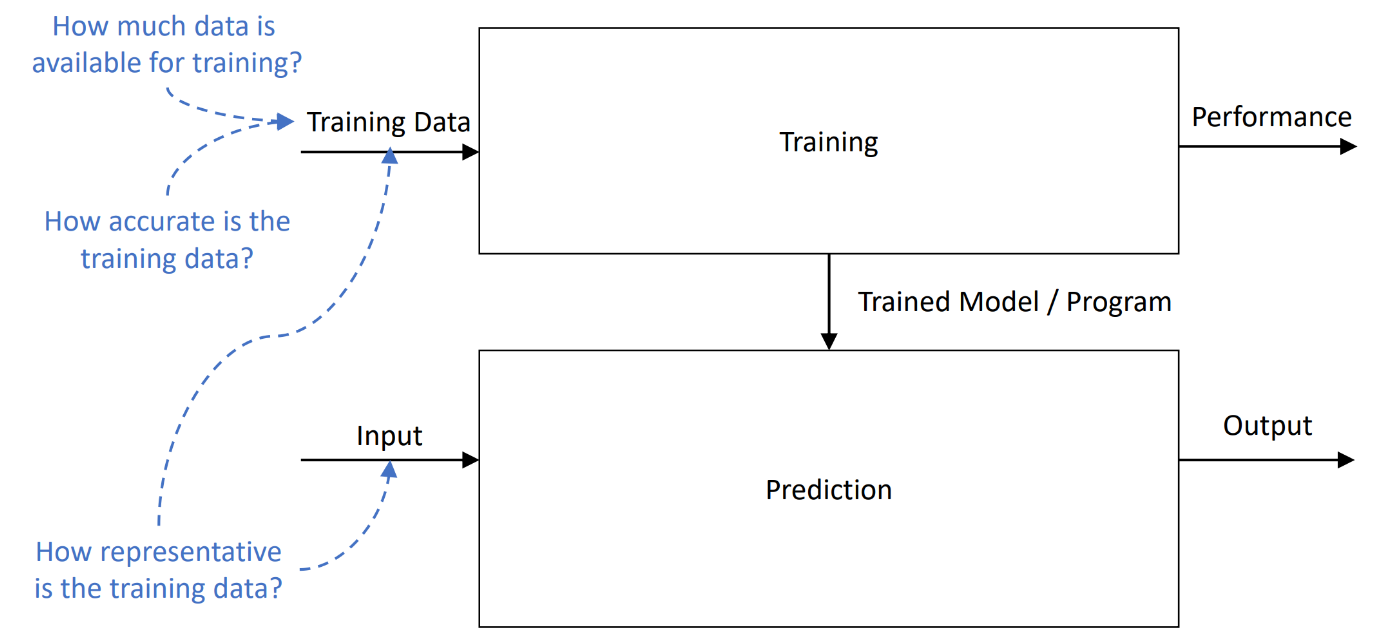
How to define requirements for ML systems?
- Data requirements
- Data quantity
- Data quality
- Quantitative targets (a.k.a. functional requirements)
- Model performance
- Nonfunctional (quality) requirements
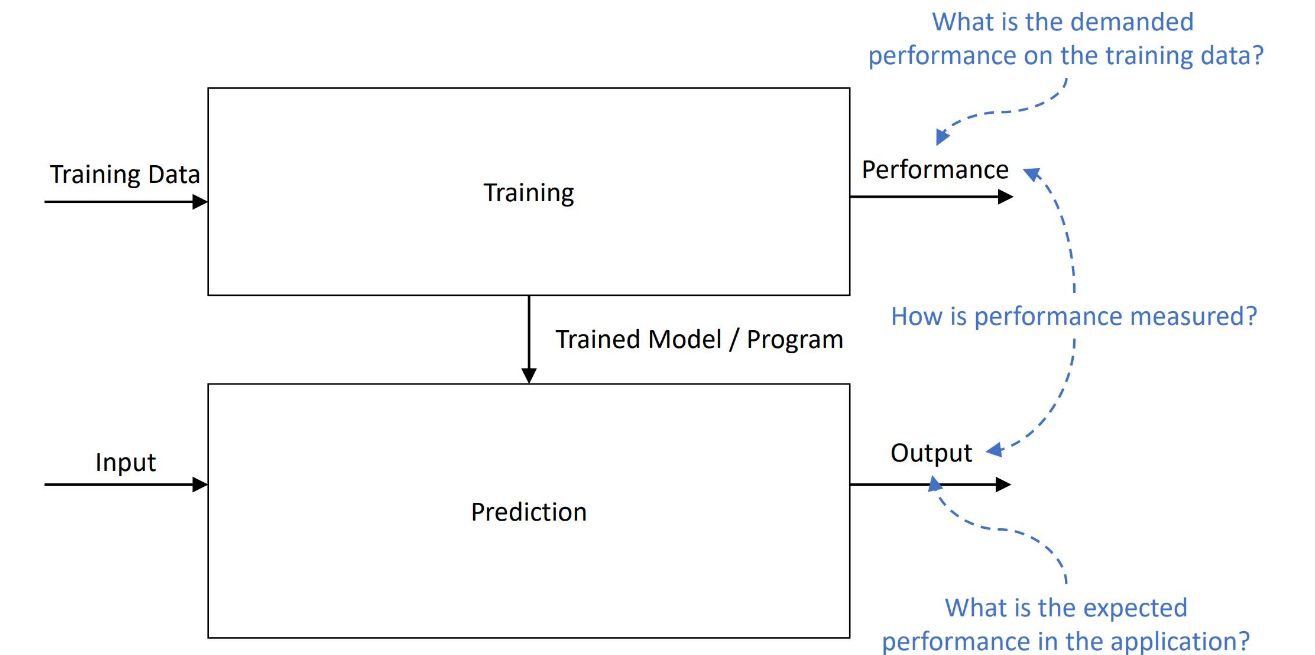
How is performance measured? Accuracy, Precision, Recall, F1-Score, ROC-AUC, etc…
Performance requirements for ML systems demand a rigorous analysis of the problem to be solved: we need to find a balance between precision and recall, depending on the application domain (if we are building a spam filter, we want high precision to avoid false positives; if we are building a cancer detection system, we want high recall to avoid false negatives).
As for the non functional requirements, we have new types of qualities for ML systems:
- Fairness (avoid bias)
- Explainability (the ability to provide hints or indication on the reasons why an application made a decision). An algorithm can be interpretable by design (decision trees, logistic regression) or we could need post hoc explainability methods (feature attribution)
- Data privacy regulations: what is the influence of laws and regulations towards data? (GDPR)
- Be informed about data collected or processed
- Access collected data and understand its processing
- Correct inaccurate data
- Be forgotten (i.e., to have data removed)
- Restrict processing of personal data
- Obtain collected data and reuse it elsewhere
- Object to automated decision-making
2.1 Model Requirements Checklist
- Set minimum accuracy expectations
- Identify runtime needs at inference time for the model
- Latency, Inference throughput, cost of operation
- Identify evolution needs for the model
- Frequency of model updates, latency for those updates, cost of training and experimentation, ability to incrementally learn
- Identify explainability needs for the model in the system
- Identify safety and fairness concerns in the system
- Identify how security and privacy concerns in the system relate to the model
- including both legal and ethical concerns
- Understand what data is available
- quantity, quality, formats, provenance
The ML Canvas is a useful tool to capture and document all the requirements for an AI-enabled system.
2.2 EU Guidelines for Trustworthy AI
Trustworthy AI should be:
- lawful: respecting all applicable laws and regulations
- ethical: respecting ethical principles and values
- robust: both from a technical perspective while taking into account its social environment
7 key requirements that trustworthy AI should meet:
- Human agency and oversight
- Technical robustness and safety
- Privacy and data governance
- Transparency
- Diversity, non-discrimination and fairness
- Societal and environmental wellbeing
- Accountability
The AI Act defines different levels of risk for AI systems:
- Minimal risk: applications such as spam filters or video games
- Limited risk: applications that require transparency obligations, such as chatbots
- They need to inform users that they are interacting with an AI system
- High risk: applications that have a significant impact on people’s lives, such as AI systems in medical devices
- They have strict obligations before they can be put on the market
- Unacceptable risk: applications that are considered a threat to safety, livelihoods and rights of people, such as social scoring
- Completely banned